Friday, September 29, 2006

Fifty Years By the Bay to be Released Next Month


(Chuck Nan is a good friend of mine and an awesome sportswriter. I met him a few years back at a Society for Baseball Research meeting at McCovey's Sports Bar in Walnut Creek. He is releasing a book called, "Fifty Years By the Bay" in mid-November. I helped him edit it and I can tell you it's the most complete and definitive history of the SF Giants that I have ever seen. To find out more about the book, visit www.fiftyyearsbythebay.com. I smell a best seller!)

Here is a bio on sports journalist and author Chuck Nan:

Chuck Nan is a sports journalist and broadcaster in the Bay Area. Nan received his Bachelor’s Degree in Finance from Loyola Marymount University in Los Angeles. For many years, he worked in the financial services industry, holding positions in operations, customer service and project management.After a successful business career, Nan started his own firm, SportsQuest Tours that specialized in fan travel to sporting events worldwide. He also served as Media Relations Director, and co-hosted several popular shows, for a local all-sports format radio station, covering all of the local professional and college teams and many high profile sports events.Chuck has recently turned to the written form of sports journalism. He is the Sports Editor for his hometown paper the Martinez News-Gazette. His first formally published piece was entitled “San Francisco Giants Spring Tour of Japan, March 1970” in Elysian Fields Quarterly-The Baseball Review in summer, 2004. Chuck has also had smaller articles published by SABR (Society for American Baseball Research) in their annual releases, The Baseball Research Journal and The National Pastime.Nan is also involved with youth baseball as a coach, instructor and administrator. In the past years, Chuck has worked with the San Francisco Giants Youth Baseball Summer Camp and EJ Sports, run by former Giants’ players, Rob Andrews and Erik Johnson, respectively and BayArea Baseball of Hayward. He has also worked with the baseball program at Alhambra High School in Martinez.A true native of San Francisco, Chuck grew up just 10 minutes from Candlestick Park. The Giants were his first sports love at age six, and still are. He has been a season ticket holder for many years and seen several hundred games in his life. Chuck has spent many a frigid summer night at the ’Stick watching his beloved team.Nan resides with his family in Martinez, California.

Thursday, September 28, 2006

What a Dream Gig!


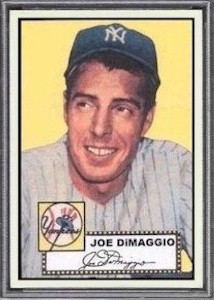
(This is an article I found on www.msn.com called, "The Secret Lives of a Baseball Card Writer -- I Worked for Topps and Lived to Tell About It" by David Roth. My first reaction upon reading it was, wow -- what a great job that must be. I am an absolute baseball nut and have a baseball site called www.thisgreatgame.com. I interview retired baseball players throughout Northern California for SABR (www.sabr.org). When I was a kid, I had a collection of approximately 20,000 baseball cards that took up half the space in my closet. I spent countless hours looking at them and reading the text and statistics on the back of each card. When I was in college at San Jose State, I sold them all for a pittance to some guy who must have been secretly drooling. This was around 1980, right before the big baseball card craze hit. I hate to think what those cards would be worth today. I hope whoever has them is enjoying them as much as I did in 1969!)

Here's the article:

As a child, when I had what might be called a serious baseball card habit, I looked forward to a new year of Topps baseball cards in a way I looked forward to nothing else. In the way things happen when you're a kid, baseball, basketball, and football cards took on an outsized importance in my life. And then, in the way things happen when you're a slightly older kid, cards just stopped mattering to me. I forgot about them for 15 years.
Topps became real to me again thanks to some basketball cards my roommate left around the apartment. Deep in the doldrums of underemployment, I started flipping through them while enjoying an afternoon beer. Inspired by the text on Vitaly Potapenko's 2001 Topps card (his teammates had nicknamed him "Eddie Munster") and with a courage assist from Miller High Life, I sent Topps my résumé. I figured that would be the end of it, but I got an e-mail in response. They asked how I would describe my interest in and knowledge of sports; I answered "freakish/obsessive." I got an interview, and then I got the job.
Starting a job at Topps was stressful. I was about to enter, as an adult, a place I'd always imagined as a gum-scented, Willy Wonkafied dream palace. Before my first day of work, I pictured packs piled in leaning towers, slides from long-ago Darryl Strawberry photo shoots, game-worn Mickey Tettleton jerseys. When I showed up, I found a standard corporate office: cubicles, recycled air, bad carpeting, worse lighting. There was plenty of candy—Topps makes Ring Pops, Push Pops, and Bazooka bubble gum—but few cards in sight. There was little indication that this place churned out baseball cards and not, say, bath mats.
My job was to edit the text and statistics for the card backs. These came from a Virginia-based head writer named Bruce Herman (author of the Potapenko card that led me to Topps) and a Quebecois statistician named Nicolas Chabot, respectively. I did ordinary editor things—assigned text, edited it for accuracy and aesthetics, drew elaborate geometric doodles at meetings—but was buoyed by the fact that I was doing these in a not-so-ordinary environment.
While the text was inescapably repetitive, the stuff I edited was certainly better than the "Hector's hobbies are eating and sleeping" non sequiturs that made up the Topps backs of my youth. Today's cards top out at 400 characters (including spaces), or about 70 words, and usually take the shape of punchy feature articles. My favorite was a card for the St. Louis Rams' Harvard-educated backup quarterback, Ryan Fitzpatrick. The back text dealt with a question posed to him by his offensive line. Figuring that perhaps he'd covered this in Cambridge, they asked Fitzpatrick what would hurt more: getting kicked by a donkey or whipped in the face by an elephant's trunk. Fitzpatrick went with the elephant slap. Bruce provided a source, and I checked it. All true. At times like that, the job was something very close to fun.
Tight deadlines created tension, but it's hard to stay stressed when your bosses are pestering you for 50 words about some punt returner's hobbies. Sadly, though, the same things that bothered me about previous corporate gigs were easy to find at Topps. Upper management was a distant, nepotistic network descending from a mysterious, largely invisible septuagenarian CEO. Below that, departments feuded with other departments. Middle managers skirmished in snarky, caps-locked e-mails CC'd to higher-ups. "Good mornings" seethed with passive aggression.
My co-workers and I shared a sense that our contributions were undervalued. My job's irrelevance—I worked on the less glamorous back half of the card, you see—was confirmed through my absence from the card-distribution rolls. At Topps, the haves receive free boxes of each new product. The have-nots, like me, do not. When I asked for boxes of the products I'd worked on, I got brushed off. Eventually, I gave in and queued up at the company store along with copy editors from the quality-assurance department.
I was frustrated not only because this wasn't what I'd expected—who even has company stores anymore?—but because a myth from my childhood got sullied. Baseball cards, it turned out, are not made in a card-cluttered candy land. Rather, they are created by ordinary men and women who are generally unawed by their proximity to a central part of American boyhood.
Neither trading cards nor "novelty candies" have been breaking any sales records recently. Consequently, Topps has banked increasingly on ultra-high-end trading cards. The company's most expensive "pack," the beautiful, autograph-laden Topps Sterling, comes in a cherry-wood box and costs $250 for five cards. While those cards make money—as, it should be said, do the basic $1.50 packs—the trading-card business has been more or less moribund for a decade. So, it wasn't a total surprise when I was laid off in July, effective mid-September.
I'm glad I got the chance to work at Topps, if only because it was fun to tell people at parties that "I'm in the baseball card business." My Topps experience also helped me remember why collectors collect. It's the hunt for what the brand managers call "white whale" cards. I know it's awfully literal, but mine is the Herman Melville card I wrote for Topps' Allen and Ginter set. That's a new product—scarce around the office, not sold in the company store, $5 a pack in card shops—in which Gilded Age cultural figures mingle with the A-Rods and Nick Puntos. Odd, I know, but I love the set.
Before I left for good, I found what I'd been searching for. It was behind a locked door, which was itself behind an ordinary-looking backroom. I flipped the switch, and lights flickered on overhead, revealing a back-backroom awash in cards. Binders lined the walls, filled with every card in every Topps baseball and football set from the 1950s through the 1990s, all pasted—why?—to white three-hole-punch paper. To get to those shelves, I had to step on and over boxes brimming with loose cards and cards in bricklike 500-count vending boxes. And that was just the cards. A box fell off a shelf and baseballs autographed by Frank Robinson rolled out. Jerseys that were to have been cut up and inserted into "relic" cards gave one dusty corner the look of a chaotic locker room. A box of bats inscribed with the names of journeymen such as Geronimo Berroa and Ron Coomer sat in another.
This back-backroom would not have looked like much to most people. I was relieved, though, to discover that the baseball card wonderland I'd dreamed of was somewhere in that office after all.

Wednesday, September 27, 2006

My Top 5 Continues: Gangster Movies

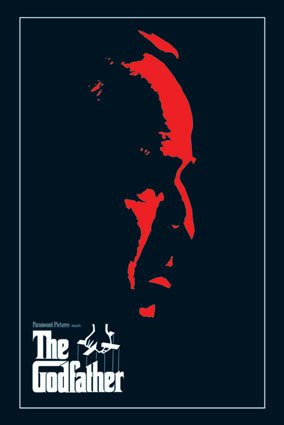
1.) The Godfather (1972): Any conversation about gangster films has to start with a discussion about this movie. Based on the novel by the late Mario Puzo and directed by Francis Ford Coppola, The Godfather is so much more than a film about an aging patriarch (Marlon Brando as Don Corleone) transferring control of his crime family to his youngest and least-likely son (Al Pacino as Michael Corleone). The richness of the cinematography, the poetic dialogue, the perfectly crafted script and the almost rhythmic pacing of this film all work together to make it by far the finest mobster movie ever made. With great performances by James Caan as Sonny Corleone, the hot-headed philandering son; Robert Duvall as the family consigliore, and John Cazale as Fredo Corleone, the weak-willed brother, all contribute to a wonderful tail of trust, respect, treachery and revenge. The most memorable scenes: The horse head in the bed and Clemenza teaching Michael how to make spaghetti.

2.) Goodfellas (1990): Based on the book by Nicholas Pileggi and directed by Martin Scorsese, this film is a classic for many reasons, including the sets, the music and memorable performances by Robert De Niro (Jimmy Conway), Ray Liotta (Henry Hill) and Joe Pesci (Tommy De Vito). It’s based on the true story of Hill, who got busted and ratted out his entire family. There’s a lot of blood, cocaine and larceny in this epic, but Scorsese knows how to do it right, primarily because he grew up with a lot of the guys this movie is based on. From the opening shot all the way to the final scene, Goodfellas weaves a story together that is compelling, disturbing, but most of all – damn entertaining. The most memorable scenes: When family boss Paul Cicero (played by Paul Sorvino) has to turn his back on Henry Hill, and the scene where Pesci shoots Spider (played by Michael Imperioli, who later became a star in the HBO show, the Sopranos) for mouthing off at him while serving drinks at a poker game.

3.) Casino (1995): Another Martin Scorsese film based on a book by Nicholas Pileggi, Casino is the story of Sam “Ace” Rothstein, played by Robert De Niro. It’s actually loosely based on the story of Left Rosenthal, a big-time real-life Las Vegas gangster/gambler who ran into trouble when he got a little too big for his britches. Joe Pesci is with De Niro once again in this one, playing the out-of-control Nicky Santoro. One of the best things about this film is that Scorsese cast a bunch of comics in bit roles, including Alan King, Kevin Pollock, Dick Smothers and Don Rickles. The only thing I don’t like about this movie is the over-acting of Sharon Stone, who plays the whining, drug addled Mrs. Rothstein. I have never cared for Sharon Stone, and when I think about the fact that she got an academy award nomination for this one, I have to believe the voters were high that year. The most memorable scenes: The horrific scene where Nicky and his brother are killed with baseball bats and buried in a corn field semi-alive, and the one where Nicky loses control playing blackjack and insults and threatens the dealers. I’ve always wanted to do that!

4.) Donnie Brasco (1997): This movie was written by Paul Attanasio, based on the book by Joseph Pistone, so I guess I’m just a little biased. Al Pacino plays Benjamin “Lefty” Ruggiero, a sweetheart of a mobster who is loyal to a fault but not all that bright. Johnny Depp plays Pistone, aka Donnie Brasco, an undercover FBI agent who gets into a big New York mob family and almost becomes the first federal agent ever to become a made man. Great performances by Michael Madsen as Sonny Black and the late Bruno Kirby as Nicky really make this one special. Some of the dialog in this film is priceless, like the conversation these goombas have about which is a better car – a Lincoln or a Cadillac. One thing I don’t care for in this one is the storyline where they show the family problems Pistone is having due to the fact that he’s working undercover and never home. Anne Heche plays his wife, who is upset all the time and a real pain in the rear. No wonder Pistone’s on the road all the time. I’d risk my life to get out of that house and away from her too! The most memorable scenes: When the boys give Lefty a pet lion and feed it hamburgers, and the scene where Pistone/Brasco almost gets his cover blown by another agent at the airport.

5.) Scarface (1983): More of a cartoon than a movie, Scarface qualifies for my top five even though Tony Montana, played by Al Pacino, isn’t Italian. He’s a Cuban exile who works his way up the crime ladder by dealing blow, killing everyone in his path and dropping more f-bombs than Andrew Dice Clay. Directed by Brain De Palma with a screenplay written by Oliver Stone, this movie is about a man who rises to the pinnacle of gangster-dom rapidly and then falls just as fast. Awesome performances by Mary Elizabeth Mastriantonio as Tony’s sister and Michelle Pfeiffer as his coked-out wife make this film a dizzying spectacle from beginning to end. The most memorable scenes: Tony Montana with the bazooka gun, yelling to his killers “Say hello to my little friend” as they descend on him in his mansion, and the scene in the restaurant when Michelle Pfeiffer tells him, “Nothing exceeds like excess Tony. You should know that.”

Runners-up: A Bronx Tale, Carlito’s Way, King of New York and Godfather II.
Tuesday, September 26, 2006

Forgiving Old Friends

Last night I got a very emotional phone call from an old friend who felt he had done me wrong. (Sounds like a country song, doesn't it?) Well, it was really a relief and a wonderful moment to be allowed to forgive him. What happened between us wasn't his fault, and I let him know it. I think it was a real relief for him to hear it. I meant it, too. Life is too short to hold grudges. I have a lot of friends that have people who were in their lives but are no longer, due to something that caused one or both of them to break it off. I don't want any situations like that in my life. Friends, especially long-term ones, are precious and should be treated as such. Of course, my friend also offered some A's playoff tickets as a peace offering, which was very cool. I'm a real sucker for playoff tickets! Do something real and get on the phone, jump on the computer or hop in your car and forgive someone in your life you've been estranged from. It'll make you feel a little more human and a whole lot better.

This Week's Restaurant Review: Zagora in SF


Zagora

They say variety is the spice of life. And when it comes to eating out, I couldn’t agree more. There are so many restaurants out there that serve the same exact stuff that it gets really old. Certain entrees become popular, and all of a sudden every joint in town jumps on the bandwagon. If I see one more Chicken Caesar Salad, Panini Sandwich or Veggie Lasagna on a menu, I will scream. I go out to eat because I want to try new and exciting flavors, not for things I can make at home or get to go from my local Pasta Pomidoro or Applebee’s. That’s why the idea of Moroccan food made by real Moroccans intrigued me when I visited Zagora in the SF Mission last week. I’ve had Moroccan food in the past that was not authentic faire. They had belly dancers and hummus, but the fixed price meal they served was basically barbecued chicken and pork jerky. Zagora, I am pleased to say, is the genuine article. And they don’t have belly dancers either. I love a good belly dance as much as the next person, don’t get me wrong. But, there’s just something about an undulating belly that makes me lose my appetite. It’s the same thing as ordering a meal at a strip club. Food and half-naked bodies just don’t go together. When we arrived at Zagora, the place was empty, primarily because we got there around 6 pm. My fiancée Angelina has a strong aversion to loud restaurants, and in a way I agree with her. One way to avoid this dilemma is to eat out earlier. Some places have early bird specials and getting there earlier means the restaurant isn’t as crowded -- so you get served more quickly, in most cases – so it just makes sense if it fits in with your schedule to make it an early meal if you can. The minute we walked in, our waitress was right there. I like that. Nothing upsets me more than an establishment where you have to wait for 10-15 minutes before your server comes over to your table. We were served two different types of bread with a wonderful spread that tasted like turmeric and garlic. Our waitress was very knowledgeable about the food, even though we could tell she wasn’t Moroccan. At one point, the owner came by and introduced himself. He was very helpful and described the particular dishes we inquired about with an enthusiasm that one can only get from an owner. We kicked off the festivities with a Momona Salad ($6), which consists of honey-glazed roasted carrots, Atlas Mountain cured black olives, grapefruit and nice, light vinaigrette that wasn’t overpowering. Sometimes I regret ordering vinaigrette, because they can be so tangy and complex that your taste buds get badly confused. For appetizers, we also sampled the Merguez Sausage ($8), which featured the aromatic signature Moroccan sausage, accompanied by hummus, a celery root puree and horse radish yogurt. Now, this is what I came for! The Merguez sausage has the flavor of linguicia and chorizo, with a little Italian sausage thrown in. The texture is gritty, which I love. The hummus was some of the best I’ve ever tasted. For entrees, we had the Lamb Tajine ($16.50), which came in a clay tajine pot, and consisted of roasted lamb shank, apricots, dried prunes, goma seeds and steamed couscous. Oh my! The flavors hit the palate with a vengeance and were so interesting that each one overlapped the next. We also had the Saweera Prawns Tajine ($15.75) which came with orange blossoms and organic roma tomatoes. For the price, I didn’t think there were enough prawns and the flavors were too basic for my liking. The Kobe Beef Kefta ($15) was a winner, my only criticism being that the meatballs of Kobe beef were a bit dry. Other than that, the sauce of garlic and tomatoes was outstanding. Overall, I would recommend Zagora, if for nothing else than the fact that it offers flavors that can’t be found anywhere else but in Morocco. With a plethora of restaurants to choose in SF, I don’t know if I’ll go back any time soon, simply because they’re so many other exciting places to eat in this town. But if you crave Moroccan, it’s a solid spot with reasonable prices and a passionate owner, sans bare bellies and loud clapping. Zagora is at 1007 Guerrero Street and their phone number is: (415) 282-6444. Their web site is: http://www.zagorarestaurant.com/.

Monday, September 25, 2006

Only Your True Friends Will Tell You


(We have all had that one friend whose breath is so bad you can hear it. And it always seems to be the same person who has to consistently violate your personal space and get about six inches away from your face before talking to you. I had bad breath for about 2 decades, until my good friend Roger Henson turned me on to dental floss while we were on vacation in Puerta Vallarta. I guess he felt it had become a crisis situation one day when I breathed on a burro and it died.)
www.msn.com had this list called the "Top Five Causes of Bad Breath"

1. A dirty mouth. “Ninety percent of mouth odors come from mouth itself—either from the food you eat or bacteria that’s already there,” says Dr. Richard H. Price spokesman for American Dental Association. “Mouth odor is like any other body odor—the result of microbes living in the body giving off byproducts.” In the mouth, this means bacteria that normally live in the mouth interact with food particles, blood, tissue, etc., to create volatile (i.e., stinky) sulfur compounds. If you don’t clean properly, the bacteria build up, and next thing you know—that’s not toothpaste on your tongue.

2. A mouth out of balance. Certain mouth conditions can exacerbate bacterial growth and odor, such as gum disease and dry mouth. Gum disease causes bloody gums, creating more elements for those pesky bacteria to putrefy. But it is a dry mouth that is the more common cause of bad breath. Saliva helps flush out the mouth, keeping bacteria moving so they don’t settle down and multiply, while drier mouth is a breeding ground for bacteria. In spring and summer, allergy medications can dry you out; in winter, dry heat tends to be the culprit.

3. Stinky foods. If it stinks going in, chances are it’s going to stink coming out. The obvious offenders are onions, garlic, alcohol and tobacco. And foods don’t only create a stench in the mouth. “Plant oils are absorbed and the byproducts enter your bloodstream so you are actually breathing the odors out via your lungs three to four hours later,” says Jeannie Moloo, a registered dietitian and spokeswoman for the American Dietetic Association. [Full disclosure: Moloo is the author’s cousin.]

4. Not enough carbs. You look great after four weeks on Atkins, so how come you still can’t get a date? High-protein, low-carb diets cause your body to burn stored fats for fuel instead of carbs and can lead to a condition called ketosis. “As fat burns, ketones build up in the body, and some are released through breath,”explains Moloo. “Unfortunately ketones don’t smell particularly good.” And bad breath trumps six-pack abs.

5. Illness. Occasionally, bad breath can be a sign of a more serious illness. The most common systemic causes of bad breath are diabetes or GERD (or gastro esophageal reflux disease). Diabetes can also cause ketosis, and the resulting bad breath is sometimes one of first symptoms that lead to diagnosis. GERD is a backflow of acid from the stomach to the esophagus. Less common but possible are liver or kidney disease—when toxins from these organs are excreted through the lungs, causing bad breath.

Sunday, September 24, 2006

Another Day Off


LIFE ON THE EDGE is taking a rare day off. Angelina has a honey do list for me today that is so lengthy and involved that there is just not time for blogging today. See you tomorrow!

Friday, September 22, 2006

The Lousy Drunk of the Year Award

(I’ve done some pretty stupid stuff while intoxicated, I hate to admit. One time I ran out onto a basketball court and slid headfirst in front of about 5,000 people at a college basketball game in Fresno. But, this guy must have really been whacked out to do something this crazy. Not only did he wake up the next morning with a really bad hangover, but he had a nice big panda bite to go along with it. And all this after only 4 beers? What a lightweight! And they're not going to arrest him? If he tried this stunt here in California, he'd get at least 60 days, not to mention all the heat he'd catch from animal groups.)

BEIJING (AP) — A drunken Chinese migrant worker jumped into a panda enclosure at the Beijing Zoo, was bitten by the bear and retaliated by chomping down on the animal's back, state media said Wednesday.
Zhang Xinyan, from the central province of Henan, drank four jugs of beer at a restaurant near the zoo before visiting Gu Gu the panda on Tuesday, the Beijing Morning Post said.
"He felt a sudden urge to touch the panda with his hand," and jumped into the enclosure, the newspaper said.
The panda, who was asleep, was startled and bit Zhang, 35, on the right leg, it said. Zhang got angry and kicked the panda, who then bit his other leg. A tussle ensued, the paper said.
"I bit the fellow in the back," Zhang was quoted as saying in the newspaper. "Its skin was quite thick."
Other tourists yelled for a zookeeper, who got the panda under control by spraying it with water, reports said. Zhang was hospitalized.
Newspaper photographs showed Zhang lying on a hospital bed with blood-soaked bandages and a seam of stitches running down his leg.
The Beijing Youth Daily quoted Zhang as saying that he had seen pandas on television and "they seemed to get along well with people."
"No one ever said they would bite people," Zhang said. "I just wanted to touch it. I was so dizzy from the beer. I don't remember much."
Ye Mingxia, a spokeswoman for the Beijing Zoo, confirmed the incident happened but would not give any details. She said Gu Gu was "healthy."
"We're not considering punishing him now," Ye said in a telephone interview. "He's suffered quite a bit of shock.

Put a Fork in the SF Giants: They're Done!


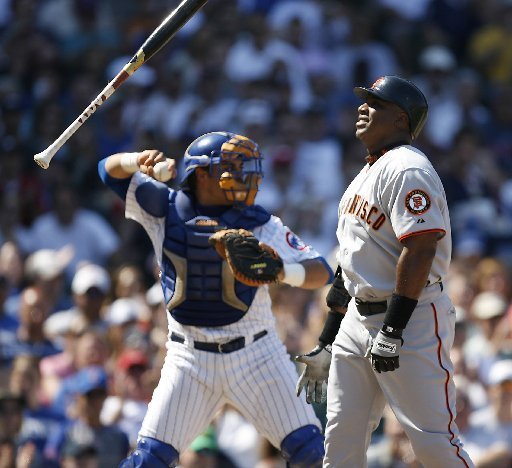
The San Francisco Giants lost again yesterday, and I think it's safe to say they will be watching the playoffs on TV this season. The Boys by the Bay never really got it together this year, and even though they showed signs of making a run every once in awhile, they bogged down at the crucial moments and are now deader than roadkill on Hwy. 101 at this point. There is hope for next year, however, because they've got some real good young pitching with guys like Lowry and Cain. The big questions during the offseason will be how can they get younger overall. With veterans like Bonds, Alou, Durham, Schmidt and Finley, they are an old and cricketty bunch. Now that the Giants are done, their only real joy in life will come during the final 3 games of the season, when they will attempt to do what they do best -- knock the hated Dodgers out of postseason play.

Thursday, September 21, 2006

Theater Review: Not a Genuine Black Man


Not a Genuine Black Man, a one-man show written and performed by Brian Copeland, is so incredibly moving, so outrageously funny and so mesmerizing and engrossing that once you’ve seen it, there’s no doubt that it will stay with you forever. It’s been described as an evening of laughter, tears and sociology. In 1972, the National Committee against Discrimination in Housing called the California city of San Leandro a racist bastion of white supremacy. It was selected as one of the most racist suburbs in the United States. At the time, CBS News and Newsweek magazine did in-depth stories on the situation. The U.S. Commission on Civil Rights conducted hearings concerning it. It was a huge story, because people were shocked that something like this could happen in Northern California. Brian Copeland and his mother moved to San Leandro when Brian was just eight, and they experienced all of the hate and racism that existed in this small town. They were discriminated against by their landlords, their neighbors, their peers and the entire community, and yet they learned from it and persevered. Brian’s mom raised her son pretty much by herself and stood her ground and refused to move out of San Leandro. Not a Genuine Black Man is Brian Copeland’s story of how it happened – how it affected him personally, changed his and his mother’s life, and, in many ways, led him to become the incredibly insightful and tolerant man he is today. I worked with Brian way back in the late 80’s when he was in his early 20’s, and even then I could sense that he would be a big star. He has been doing standup ever since then, and recently won the San Francisco Cabaret Gold Award for his act. He is a multitalented comedian, writer, TV host (Channel 5), radio talk show host (KGO) and commentator. But, this one-man show has really put Brian on the map, and for good reason. It is the longest running one-man show in the history of San Francisco. HBO is in the process of creating a series around the show. It has gotten rave reviews from everyone who’s seen it – from the SF Chronicle to every single TV and radio station in the Bay Area and beyond. I have seen it twice, and the second time was actually better than the first, because I remembered a lot from the first time and was actually more prepared for it. I was able to catch a lot more of the subtlety and nuances of his monologue.
Not a Genuine Black Man is playing at The Marsh, a very small and intimate theater in the Mission, on 1062 Valencia Street (near 22nd Street). Call (415) 826-5750 for information and tickets. It’s only being perfumed on Thursdays and Fridays through October 21st right now, so get your tickets before all of the shows sell out. Copeland also recently wrote a book based on the show, which is also getting stellar reviews. It’s currently available through http://www.amazon.com/. For more about Brian Copeland and Not a Genuine Black Man, visit his web site at: http://www.briancopleand.com/. For more information about The Marsh, take a look at: http://www.themarsh.org/.