Friday, July 28, 2006

Field of High School Dreams


My old high school just got a real baseball field. With natural grass and a manicured dirt infield. A landscaped, completely level field -- free of rocks, underbrush and assorted small animals. I hear it even has a fence in the outfield, over which hopefully the home team will hit a plethora of four baggers over many successful seasons.
Yes, my alma mater, St. Michael’s Preparatory High School in Silverado, California, just built itself a baseball field. And although it’s been almost 30 years since I played for the Pioneers, I must say I am proud as can be of the school for stepping up to the plate and installing a genuine baseball facility they can call their own.
When I played baseball at St. Michaels, all of our home games were played at public parks and other high schools’ fields. And we practiced on campus on a field that was, even by minimum standards, atrocious. It was on a hillside, with home plate at the bottom; so that ground balls slowed down as they rolled uphill and fly balls flew over your head as you chugged up an incline. The ground was hard packed dirt that hadn’t been tilled or weeded since the Paleolithic Era. There were small chasms everywhere, and a large crack in the earth that stretched from third base out into left field, which we affectionately named “Nobody’s Fault”. The foliage in both the infield and outfield (there was really no distinction between the two) consisted of thistles, tumbleweeds and poison oak. The backstop looked so old we speculated that it had been donated to the school by none other than Alexander Cartwright himself.
One time during a particularly error-filled practice, I made an errant throw from shortstop to first base, beaning a poor little squirrel in the process. He lived, but limped slightly from then on, which, of course, made me feel terrible. Another time we had to call off practice because someone hit a ground rule double into a hornet’s nest. Roadrunners, hawks, wolf spiders, gophers and lizards all got into the act at one time or another.
Even with all these issues about the field – from our frequent encounters with the local wildlife, all the way to the simple fact that we were playing in conditions similar to those on the Planet Mars – it never seemed to get in the way of us always having a really good time practicing on our makeshift baseball field at St. Michael’s Prep.
Some people might think that a high school getting a baseball field is no big deal. Well, then they don’t know St. Michael’s. St. Michael’s is an all-male Catholic boarding school with a student population of approximately 60-80 kids in grades 8-12. It is known for its academics, not for its sports programs, which, when I attended in 1975-1977, consisted of just basketball and baseball. Now the school has cross country, soccer and 8-man football as well. Since the school was so tiny, we played in the lowest of leagues, in the “small schools” division; (known as Division VII today) the absolute cellar of the CIF as far as athletic talent was concerned. Our league schedule consisted of a menagerie of borderline educational institutions.
First there was Desert Sun -- a progressive, ultra-liberal high school in the mountains above Palm Springs where rich parents took time out from saving manatees, skiing in Aspen and summering in Santa Barbara just long enough to deposit their problem kiddies there. Think of spoiled brats with American Express Cards and mouths that would make longshoremen blush. When we played them in baseball, they smoked cigarettes in the dugout and made out with their girlfriends as if that would impress us. (As a sophomore who had never even held a girl’s hand -- it sure did!)
Then, there was Nimitz Military Academy -- the decaying military school in Lake Elsinore, where the basketball court was in a hangar with rats and sewage problems, and where none of the cadets’ uniforms matched. We were told that the school had once held great prestige. From the look of the campus, I estimated that its legendary days probably came to an end right around the time of the Civil War. The corps of misfits at Nimitz saluted our departing bus after one game once with an assortment of gestures that I’m sure aren’t acceptable within any branch of the military. To say that these kids were trying to be all they could be was more of a threat than anything else.
Then to top it off, we also played special “schools” with names like Twin Pines and Los Pinos. These institutions can best be described as juvenile work camps. Prisons for kids, essentially, although most of these guys couldn’t be considered children by any stretch of the imagination. Traveling to play them at their facility was always an adventure. We’d have to drive for hours to the middle of nowhere, and when we finally reached our destination, we were escorted through this series of gates and fences to the basketball court or baseball field. The baseball field was hard clay, without a single blade of grass in sight, and there was a big sign in the dugout that said, “Do Not Leave the Dugout: Rattlesnake Danger.” The entire field was on a huge plateau, so any foul balls that were hit went down into a deep canyon -- souvenirs for the snakes and rodents and who knows what else. The outfield had towers along both foul lines, manned with “youth counselors”, prison guards basically, there just in case someone got a bright idea and tried to make a run for it.
In basketball, these youth camps would always have one great player who would dominate the entire league for the first half of the season. They would have four average white players and one 6 foot 9 black guy with a beard. We would try to defend against this man among boys, and we must have looked like a bunch of Chihuahuas yipping at the heels of a Great Dane in doing so. As the basketball season progressed, their phenom would behave himself just enough to get released, and without their big star the work camp team was just another group of semi-coordinated, ridiculously slow white boys with bad haircuts. Just like us, actually, but not as smart or well coached. The end result was that we would usually win the second half of the season and invariably capture the league title. Don’t knock it. Winning is winning no matter how you look at it, and to us at that time it was everything.
But, winning in the classroom was more important than anything you could accomplish on the court or diamond. Because at St. Michaels in the late 70’s, studying wasn’t just something…it was the ONLY thing. At most schools, the jocks are always more popular than the eggheads. Not at St. Michael’s. The guys we all looked up to in my class were the ones with 4.0 GPA’s and near-perfect SAT scores. We weren’t interested in things like batting averages and shooting percentages. We were more concerned about getting good grades and performing well in the Orange County Academic Decathlon, a scholastic statewide competition in which we consistently trounced schools 50 and 60 times our size.
Since we didn’t have much of a sports program, there was no room for big heads or jock attitudes at St. Michael’s. Plus, it was an all-boys school, so there weren’t any women to try and impress. The two nuns who cooked in the school’s kitchen were Hungarian, and could have cared less about sports, unless you were talking European Water Polo.
And if your performance in the classroom faltered, you found yourself off the team. Every week, we would lose a player or two due to bad grades. It could be really frustrating at times, because we were already short of good personnel, especially in baseball, where we had to field nine players. You’d go to a game, and half your infield wouldn’t be there. “Where’s our second baseman?” “He flunked his Geometry quiz.” “Our shortstop?’ “Latin Exam.” “Third base?” “English Paper.” “Oh.”
At the time I was mad, because I am so competitive and I didn’t want to lose any games. But, I realize now that St. Michael’s was the primary reason a lot of my fellow students ended up going to college and building great careers, instead of living at home and working at Arby’s or Jiffy Lube. I was also well aware of the fact that none of these guys I played for with the Pioneers had any future in baseball whatsoever, unless they became an agent or ended up making enough money to buy a team. So, if missing a few meaningless games back then in high school got my fellow ballplayers where they are today because they studied a little harder -- well, I figured that’s pretty cool.
St. Michael’s was a wonderful experience in many ways for me, but practicing on that sorry baseball field was surely not one of them. To be honest with you, I still have occasional nightmares about that poor little squirrel. And a few scars where wildly thrown baseballs hit dirt clods or rocks and nailed me in the shins and ankles. That’s why I’m so pleased that the school now has its very own baseball field.
I’m sorry I won’t be able to attend their alumni game this year, but my chiropractor won’t. 47 years is the time in life when old ballplayers step aside and let the youngsters play the game. And hopefully this is the year that baseball dreams start coming true for St. Michael’s Prep and its brand new “Field of Dreams.” Congratulations, Pioneers. And good luck!
(I am very proud to announce that the 2006 St. Michael’s varsity baseball team (pictured above) got into the quarterfinals of the Division VII CIF playoffs this year. St, Michael’s Prep is a great school, so if you’re Catholic and want to put your kid in an incredible learning environment, check out the school on their web site: www.stmichaelsprep.org.)

Tuesday, July 25, 2006

Special Effects the Only Good Thing About Pirates of the Caribbean, Dead Man's Chest


I recently saw Pirates of the Caribbean, Dead Man's Chest and to say it was mediocre is being nice. The first movie in this series did very well because it had 1.) Characters we cared about 2.) A story that moved along and made sense and 3.) Really incredible special effects. This sequel has the latter going for it and that's all. The special effects in this one are awesome. The story and the acting and everything else is just okay, nothing spectacular.
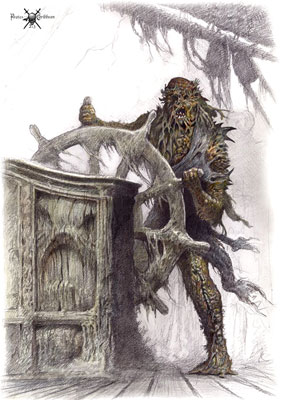
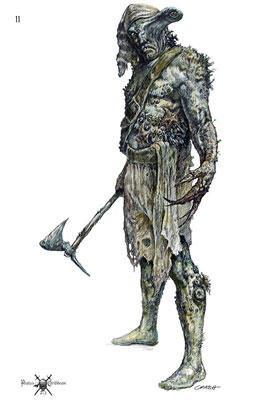
Davey Jones' crew (see sketches above) is a rag-tag bunch of the strangest and grossest creatures you've ever seen, and they're fun to watch. I wish I could say the same for this movie. How many Disneyland rides are they going to turn into feature films anyway?
If they come out with an "It's A Small World" movie, with all those little kids chattering away non-stop, singing that same lame song over and over -- I just know I'll kill myself.
I give it 1.25 (out of 5) stars.
Without the great special effects, I'd give it a .50.

My Top 5 albums for 2006


I know that 2006 isn't even over yet and most of these albums aren't that new. I always seem to be one or two steps behind the times. I'm going on my annual houseboat trip to Lake Shasta and every year on the trip they have this tradition of asking you what your Top 5 albums are for that year.

So, here are my Top 5 albums for 2006:

1.) Hot Fuss (The Killers)
2.) Culahoma (The Black Keys)
3.) Youth & Young Mankind (Kings of Leon)
4.) Wolfmother (Wolfmother)
5.) Stadium Arcadium (Red Hot Chili Peppers)

That Andrea is One Deadly Bitch!


On a foggy July night in 1956, the Italian luxury liner Andrea Doria was on its way toward New York on the last leg of a trans-Atlantic crossing when it collided with a passenger ship and sank, killing 51 people.
Half a century later, the Andrea Doria is still taking a toll as it rests on its side about 200 feet down in frigid waters south of Nantucket, Mass.
At least 14 people have died while exploring the wreck. The latest fatality came July 8, when researcher David Bright suffered decompression sickness after making his 120th dive to the Andrea Doria.
"It's called the Mount Everest of diving. It's such a dangerous depth, but it attracts a lot of interest," said Capt. Robert Meurn, professor emeritus at the U.S. Merchant Marine Academy on Long Island and, like his friend Bright, an expert on maritime history and the Andrea Doria in particular.
Why do people do really dangerous things? Aren’t there enough other shipwrecks out there to explore that aren’t quite as scary or difficult as the Andrea Doria that would still satisfy these adrenalin junkies? I used to think the people who perished attempting this treacherous dive were amateurs and rookies who wouldn’t know a regulator from a vibrator. But, this guy who died on July 8th was an experienced professional making his 120th trip! It just goes to show that anything can happen at any time and that means you have to be able to deal with the worst. What happened to David Bright is extremely unfortunate. But, hopefully this story will keep other people out of that wreck. It’s obviously really dangerous! Maybe people who were considering the dive will now settle for watching the whole thing on the National Geographic Channel instead of stupidly risking their lives.

Monday, July 24, 2006

These Dodgers are Playing like @^$(*! Dawgs!


After a respectable first half, the Los Angeles Dodgers are now officially the coldest team in baseball. (1-9 last 10 games) What a shame! Walter Alston must be rolling over in his grave!! I heard that Steve Garvey is so upset he stopped dating 20-year-olds. Tommy Lasorda is so shaken he hasn’t eaten in an hour. Swept by the Cardinals again this weekend, the team from Chavez Ravine has seemingly rolled over and is playing dead. The pitching staff has been decimated by injuries, they’re not getting the timely hits they were earlier and for the first time this season, pitchers are dominating them. But wait, fear not blue bleeders – there is possibly good news here. The collapse may actually be a blessing in disguise. Maybe now GM Ned Colletti won’t trade away a bunch of the team’s young talent to make a run at a playoff spot this season. The young kids – guys like Kemp, Billingsley, Martin, Ethier, Broxton, Loney and a bunch more – are going to be the nucleus of the Dodgers in the next decade, so why trade them for a player that may or may not get you to the playoffs? Why give up a couple of youngsters for a Soriano, Willis, Maddux or Smoltz if they’re just going to sign with another team after the season is over? I say the Dodgers stick with what they have and try to develop it. They will reap the rewards down the line and life will once again be happy in Dodgerland. But, right now – I have to tell you – my dog Kaido could play better. (See photo).

For some great Dodger stuff see: www.dodgerdugout.com.

Sunday, July 23, 2006

Where did the Sopranos go?


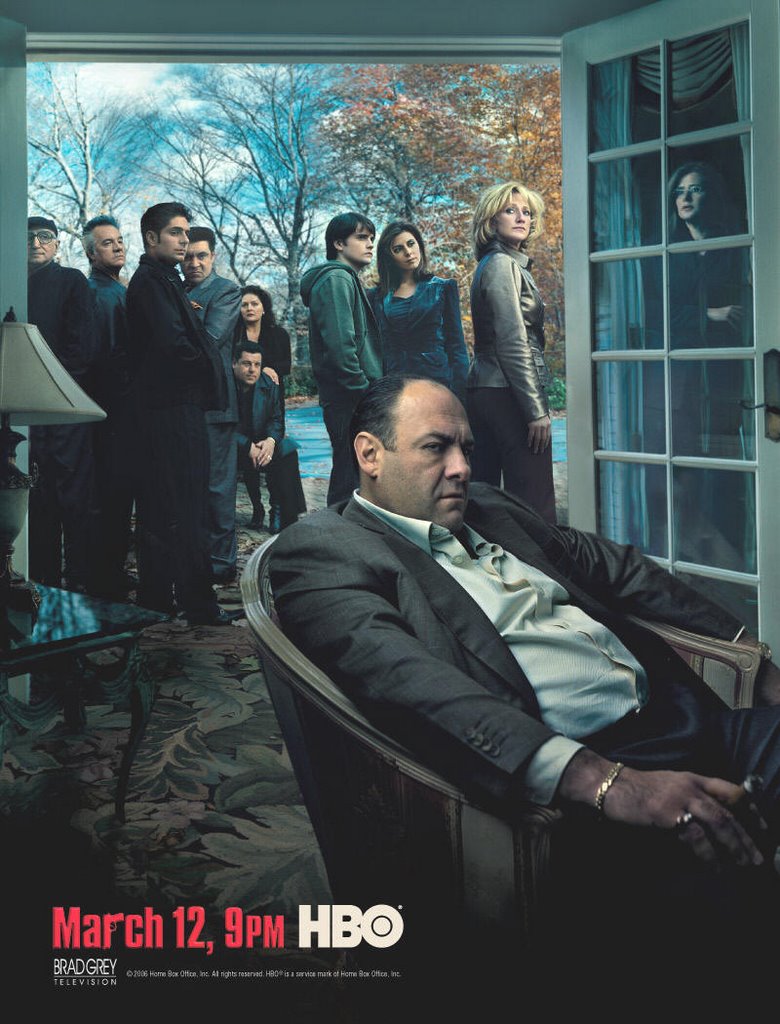
It’s Sunday and I miss the Sopranos. I can’t believe that we actually have to wait until January for the rest of the episodes. To be honest, I don’t know why I even like the show anymore considering how far it has fallen. Season one was just amazing. The show broke new ground and managed to stay clear of the stereotypical gangster films of the recent past. It was well-cast, the writing was fresh and it just worked.
Since then, the Sopranos has suffered a gradual death, in my opinion. David Chase, the show’s creator, has a style of writing where he doesn’t worry about wrapping up storylines or pursuing conflicts between characters. Take this last 2/3’s of a season (season six). First, Tony gets shot by Uncle Junior (played by Dominic Chianese) and goes into a coma. So, the next few episodes we have to sit through these silly “parallel universe” coma dream sequences. What is it with this guy and dream sequences? Every time he can’t come up with a way to finish a storyline, he concocts some dumb, meaningless dream sequence. To be honest, I think the show lost a lot of its appeal when Mama Soprano (the late Nancy Marchland) died. She was the glue and the soul of the show. Ever since she died the show has lost its momentum. I just hope David Chase pleases his many fans by wrapping up loose ends in January. A lot of questions need to be answered.
Will Christopher Molisanti (Michael Imperioli) kick heroin and become Tony’s heir to the throne? Will Tony’s kids, Meadow (Jamie-Lynn Sigler) and Tony Jr. (Robert Iler) get involved in the family business? Will Phil Leotardo (Frank Vincent) continue to annoy Tony enough to get whacked? (Or will Tony get whacked for that matter?) Will they find Andrian’s (Drea De Matteo) body? When will the feds decide to indict Tony and his buddies? And what the hell are they waiting for? Surely they enough evidence by now! And from what we learned in season one, I know there’s old Sopranos $$ in that house. Will they find it? Will Tony finally get caught screwing everything that moves? Will Big Pussy (Vincent Pastore) come back from the dead?
It doesn’t seem like Chase will have enough time to answer all of these questions if this is indeed going to be the show’s last season. I have a feeling it won’t be – I’m betting this Chase guy will end up retiring more times than Sugar Ray Leonard. The Sopranos will be back for season seven – count on it. I just hope it gets better, because otherwise I'll have only Entourage (one of my other favorite shows) to watch on Sunday nights.
David Chase just wrote a book called “The Tao of Bada Bing”, which in a nutshell, explains the philosophy of mobsters, which basically says “That which confounds us gets whacked.”
Here is an interesting stat on the show: The season-by-season body count:

Season #1: 15 bodies
Season #2: 7 bodies
Season #3: 10 bodies
Season #4: 7 bodies
Season #5: 12 bodies
Season #6: 14 bodies (so far)

For a great fan site about the Sopranos, visit: www.the-sopranos.com.

Saturday, July 22, 2006

Confessions of a Freelancer


(Please Note: I wrote this article for the Western Art Directors of California (WADC) quite awhile back. But, it's funny because a lot of what I wrote here still rings true. For those who don't know me, I've worked 20-plus years as an advertising copywriter, and the last 15 years in a freelance capacity.)

They asked me to write an article about freelancing. Well, it used to be called freelancing, back in the 80’s. Now it’s called contracting. Which, in a way, shows how much things have changed.

Freelancing conjures up visuals of flip-flops and Vaurnets, back in the days when you needed a typesetter. Things were much more mellow back then. You could get away with playing the distant, quirky, creative type. It was okay if you dressed casual, and slept in your car the night before. I told my parents back home that I had hit it big in the mid-80’s and was living at the Fairmont. Actually, I was living in the back seat of a 1968 Fairmount. In the 80’s, you could be late for a brainstorming session and it was no big deal. If you couldn’t make it, you’d call and say you were somewhere you weren’t, and they couldn’t catch ya because they didn’t have Star #69 or Caller I.D. back then.

It was a time of super- soft deadlines, vague budgets, open purchase orders with “not to exceed” prices, working with totally laid-back clients who said “cool” a lot. All our ideas were brilliant. All of our designs fine art. Boy, were we full of it, or what?

Contracting is the accepted term of the 90’s , and it’s much more formal. It connotes people in suits, shaking hands a lot, videoconferencing, tons of memos and e-mails and painfully long downloads. Six people needing to approve a single data sheet design, one at each corner of the globe. Telecommuting from Starbucks with two cellulars, a laptop, a Newton, a beeper, and enough pepper spray to quell a San Quentin prison riot.

Contracting has a more ominous sound now, too. You are under contract, so you better meet the deadline and do a good job or you and your project, and possibly your fee, will be whacked, downsized or eliminated altogether. Heaven forbid your contact decides to take three months “mental health leave”. Yes, it’s more complicated being a freelancer now, there’s more competition, but it still beats the mourning commute and a boss that makes Rasputin look endearing.

Clues to Working With Artistic Types

Even though I am a copywriter and not a graphic designer, I think I have a few interesting things to share about designers that I’ve worked with, most of them contractors like myself. Most of the time, I’ve enjoyed the relationships that I’ve established with artists of all kinds. I wish I could say the same about those people on the client side. Some of them have been pure delights. Some have not, and have surely helped to age me well past my 40 years. I have enough gray in my hair to put Grecian Formula on the NASDAQ, most of it attributable to problem clients.

There are great clients or horrible clients. If you don’t get Mr. Rogers, you get Attila the Hun. There doesn’t seem to be any in between. And that’s if there’s only one client to deal with on a job, which nowadays is rare. With a two-headed client, it’s even worse. Dr. Jekyll likes your work, but why is Mr. Hyde vomiting? And heaven forbid it’s a team effort, in which case you get to deal with more personalities than Sybil.

Another thing I can’t stand is when clients adopt these stringent requirements when they are looking for a contractor to work on a particular project. “We’re looking for a designer who has experience doing annual reports for small porcelain thimble manufacturers in the Midwest. They must also know Framemaker, Pagemaker, Excel, C++, Cobol and SQL. It would also help if the person likes Viagra jokes and knows the words to “Muskrat Love”.”

These people will search and search for the right candidate, conducting interviews and viewing portfolios, making everybody jump around like circus chimps, hopping dutifully through these ridiculous hoops they’ve concocted. All the while knowing that they’ll eventually end up giving the job to somebody’s son who is taking art classes at De Anza and couldn’t operate an etch a sketch with both hands. One time a big-time creative director told me that he didn’t think I was qualified to do an ad for a homebuilder because I had never personally bought a new home. I told him I’d never been pregnant either, but that I did one helluva brochure for Planned Parenthood.

Rule #1: Let Artists Create

I learned something long ago about working with artists, and that is don’t tell them what to do. The less direction the better. Let them do their job. Why is it that everybody thinks he or she is a designer? I mean, when your plumber gets under your sink, do you get down there to advise, you and him, the sweat and Drain-O and acres of butt-crack? Of course not.

When Michaelangelo was painting the ceiling of the Sistine Chapel, did they say, “Don’t you think that cherub there should be smiling more?” Did they tell Warhol to junk the soup can and go with a milk carton? Mr. Van Gogh, we love the self-portrait. We’d just like you to add one ear, that’s all. You went to school, studied real hard to become a graphic designer, you’ve done a lot of incredible work and everyone really, really likes you. You’ve won all kinds of awards, you’ve earned respect in the industry and from your peers. So, why shouldn’t it bug you just a little when some receptionist who slept with the right CEO and is now the marcom manager tells you how to layout a brochure? We’ve all been there.

It Takes All Kinds

Many of the designers I have worked with seem to find a niche and stick with it. You see their work, do projects with them, and after awhile, you realize all of their stuff looks a lot alike.

I have been able to categorize several types over the years. First, you have the hypoglemics. They just have to bleed everything off the page. If it’s still breathing, let it bleed. They can’t work with borders, oh no. Bleed it! Bleed it onto the next page! Bleed it onto the floor! The walls. If there isn’t something like a graphic tourniquet for these poor souls, there should be! On the other end of that spectrum are what I call the “White Space Cadets”. Rather than lots of solid color running off in all directions, they promote the stark, the understated, with lots of free, loose, empty, white space. Less is more, these artists feel. Until they realize that people aren’t going to fork over the big bucks for the cover of the White Album anymore. It’s been done. Throw some type in there, or something. And put some clothes on.

Other types of artists I’ve encountered over time include font junkies and what I call crockpotters, those artists that want to use every little trick they’ve learned on every single project they do. Hey, even Houdini saved a couple for the next show.

I shouldn’t talk, really. I myself have an arsenal of copywriting tricks I implement, sometimes way too much. I guess we’re all guilty of it, but if it works, why not?

Well, those are some of my thoughts. I have more, but I know you realize that.

Freelancing. Contracting. What term they will use in the new millenium is anybody’s guess. It’s not a bad gig, though. It has allowed me to exercise a lot of free time. It has allowed me the luxury of writing this article. For all the downside I still love it. Now if you’ll excuse me, I have to meet with Attila for lunch. Right after I finish Mr. Rogers’ brochure.

(If you're a graphic designer, advertising copywriter, photographer or just want to network with a bunch of creative types, you might want to consider joining WADC. It is a great organization and they probably have a chapter near you. Their web site is: www.wadc.org. Also, if someone needs ad copywriting services and is looking for someone who is fast, creative and very affordable, my web site is: www.smartercopy.com.)

Friday, July 21, 2006

Today I'm Chilling


As you can see, I've been posting a lot, almost 3 times a day, and I know I can't keep it up forever. I think some of my readers are suffering from what's called "Content Overload". So, today is Friday and I'm going to just chill. Maybe I'll go on a long walk down to the Palace of Fine Arts. Maybe I'll go swimming at Aquatic Park. Maybe I'll go to the DeYoung Museum or to the Zoo. Or maybe I'll do absolutely nothing!

Thursday, July 20, 2006

Ratty Pulls a Bambino


Ratdog got into the large dog food bag in the kitchen and pulled a major Babe Ruth with the Science Diet. He gorged himself at lightning speed, promptly overdosed on the stuff and eventually projectile vomited all over my office floor. Prior to that he looked like a snake who had just swallowed a baby deer or a large bird. He had a belly like Idi Amin after eating a few folks. Right now, he's on his pillow directly behind me giving me the evil eye. Like somehow it was my fault. I'm sure he'll use this as an excuse not to come to work tomorrow.

Sister Sandy Koufax, a short story about life & baseball by Hymie Laredo [PART TWO]

Because I attended primarily parochial schools throughout my pre-college educational career, I absorbed more than my share of physical abuse from my instructors, primarily priests and nuns, who never seemed to fully appreciate or tolerate my quick wit and incredible comic insight.
In public school, where I was always certain the administration would have more easily grasped my unique style of satire if given the chance, physically assaulting disruptive students as a way to keep them in line was discouraged and, in fact, illegal. The Catholics, however, had no problem with it.
My parents realized early on that public school was not going to be the solution to my varied range of behavioral problems. I needed the discipline of the Catholic school system. In public school, hooliganism was rampant – in parochial school, it was just as bad, but Catholic kids over the years had learned to hide it better.
It wasn’t like my parents were Catholic. My folks sent me to Catholic schools for the discipline and nothing else. These nuns and priests who had essentially made my life a living hell for a good portion of my life didn’t know it, but they had been hired for their disciplinary muscle, and that’s all. Bodyguards in habits and collars, basically.
Conversely, every adult in authority at St. Basil’s the Venerable -- where I matriculated during my elementary and middle school years -- all the way from the bearded cafeteria lady to the blind crossing guard, to the grizzled old alcoholic janitor who was later fired for drinking all the holy wine, had free rein to smack me when provoked. They were not only permitted to do so, but encouraged, and, in fact, this aspect of the school was one of the primary reasons my parents had sent me there in the first place.
It was a reign of terror and violence that would shadow me throughout my schooling. It was a basic lesson -- open your mouth, get whacked upside the head. It was a simple process of association, a sick experiment not unlike the horrible things Pavlov did to his poor dogs. At least the pooches got fed every now and then. All I got was pummeled. I was hearing bells, all right, but I wasn’t salivating. The ringing in my ears was from the quick lefts and roundhouse rights I was on the business-side of almost hourly at St. Basil’s.
It’s amusing in a way to think that of all the things that happened to me in Catholic school, both good and bad, the only times I can clearly remember are the numerous instances where I got whacked around for some silly prank I pulled or some smart-ass remark I made. Like a punchy old boxer long retired from the ring, the countless beatings I took; those fleeting instances of extreme discomfort and humiliation; appear in my mind just like they happened only yesterday. They play themselves out in slow motion sometimes, blow-by-blow, blood and pieces of flesh flying everywhere, just like those great fight scenes in “Raging Bull".
Initially, during the pre-confirmation years, the nuns were the ones who took on the arduous chore of administering to me the discipline I was evidently so much in need of. Over time, their forms of torture evolved as they became more sophisticated and increasingly frustrated by my antics.
The first form of this was the old wooden ruler over the knuckles routine. This hurt considerably, and could have been a marvelous deterrent if it wasn’t so logistically impractical. For example, you couldn’t perform it on an unwilling victim without dragging them kicking and screaming. And then good luck trying to subdue someone long enough to crack ‘em a good one. Anyone who was dumb enough to stand there while they got whacked with a piece of wood with a metal rod in the middle, like the newer rulers had, was deserving of such a punishment anyway.
The simple truth was that this once reliable behavior modifier may have worked in the past when kids were more in awe of authority, but in the seventies, it was passé. Like trying to get the country to switch over to the metric system, it was a noble gesture, they gave it a solid effort, but in the end, it was unsuccessful. The priests and nuns eventually abandoned the ruler method of punishment, and began to look elsewhere in pursuit of the perfect deterrent for smart asses like myself.
The second method of retribution I encountered was the flying blackboard eraser, familiar to anyone who has ever gone to Catholic school. About the size of a small brick, I soon learned that this missile made of cloth and wood, when thrown by a seasoned professional, flew across the classroom with amazing speed and accuracy. And, upon reaching its destination -- which, in most instances, consisted of my large, crew cut head, and enormous, fan-like Alfred E. Neuman ear lobes, -- consistently inflicted extreme pain.
Eventually, I was made aware of the fact that the blackboard eraser was the sisterhood’s primary weapon of choice at St. Basil’s. Each and every nun threw it well, like it was something they taught in the convent, right along with the classes in chastity and the scriptures.
There wasn’t a slouch in the bunch--all of them, from Sister Astor to Sister Gertrude (though she was a little older and nursed a bad case of bursitis), could throw the thing fast and true.
To this day, I still hold one particular nun, Sister Sandy Koufax, in total awe. Her real name was Sister Sandy, but the Koufax was added many years before I came to St. Basil’s. And it was certainly well-deserved.
Sister Sandy had all the qualities of a truly great eraser thrower, natural abilities you can’t teach, like dead-on aim and the kind of velocity they can only gauge with a speed gun. But, the most amazing thing about Sister Sandy was her incredible stamina. She finished better than the great Cy Young, never wavering or showing a hint of fatigue.
Heat, cold, rain, wind, sleet, hail, old reliable Sister Sandy was rock solid and undeterred day after day, from the moment morning bell sounded, all the way through after-school sports. She seemed to get stronger rather than tire after lunch. I always felt that she relished the competition I provided, and I was prepared to test her at every turn.
Sometimes, if they got lucky, students could take control of a classroom late in the afternoon when it was hot and humid and they sensed that a young, rookie nun’s arm was tiring and concentration waning. A couple of limp, errant throws of the eraser told you that this particular nun could be had – that she was vulnerable and you could get away with any misbehavior you fancied. Like an injured gazelle being subdued by a pack of hungry lions, the prey was yours.
On occasion, as an extreme measure, Sister Superior would call for a reliever, like a novice priest or a nun-in-training, to stop the barrage of unruliness that always took place when some poor nun couldn’t throw strikes anymore.
But, even a steady stopper knew that by then it was too late. The convicts were in charge now. The suddenly harmless erasers sat helplessly on the ledge below the chalkboard, untested and about as intimidating as Bambi.
Chaos reigned supreme during those rare sweet moments of childish revolt, the air filled was with freedom and a sea of spit balls, sticking to anything and everything, including the crucifix above the door and the traditional picture of the Last Supper, making it appear for a moment as though Christ and the twelve disciples were dining on wet clumps of notebook paper instead of bread and wine.
Mischievous little boys snapping the girls’ bra straps amid shrieks of horror, giving each other melvins in a huge, out-of-control snuggy frenzy, finally turning on the fat, sweaty, kid with the glasses, just like poor “Piggy” in “Lord of The Flies”.
That never happened in Sister Sandy’s class, though. Not with Koufax. She was a closer, a workhouse, and because we knew she’d be sharp every day, she was always unquestionably in charge.
Just when you thought you’d gotten over on her, she’d fool you. Sister Sandy had a curve just like Koufax, a sneaky pitch that looked like it was going to hit someone two rows of desks over, when suddenly, it veered viciously in your direction , and “whap”, you got it!
Her accuracy was uncanny -- she reminded me a lot of Jim “Catfish” Hunter that way. Her strike zone went from the base of the neck to the top of the cranium. But, her favorite target was right in the middle of the forehead, which left a white chalky circle that looked kind of like the ash spot they gave you in the same location every Ash Wednesday.
It was her signature move, and when it was done just right, she got you precisely between the eyes. You’d leave the mark there on your skull as long as you could, even though it would disgrace you with the good kids, like the big “A” they used to give to adulterers in the early days of the American colonies.
But, the goof offs and cut-ups thought it was neat -- like a tattoo that said, “Bad to the Bone” or something. But, you wouldn’t wipe it off as a show of respect to Sandy, as if to say begrudgingly, “I got nailed by the very best.” Because when Sister Sandy hit you with a blackboard eraser, it was like striking out against Bob Feller -- there was absolutely nothing to be ashamed of.
Sister Sandy had little things she’d do when she’d throw too. She’d hide Vaseline under her nun’s hat and sneak some onto the eraser, causing it to dip and hop just like Gaylord Perry’s legendary spitball. She’d stare you down with that petrifying scowl, like Bob Gibson and Don Drysdale used to do in the sixties.
You see, Sister Sandy was an avid baseball fan and borrowed many the idiosyncrasies of all her favorite pitchers. She fidgeted and stalked around the podium at the front of the classroom and talked to herself, the same way Mark “The Bird” Fidrych used to act out on the mound.
During her windup, she turned her back to the class and briefly faced the blackboard, her bare, unshaven, vericous vein-riddled leg emerging from under her habit and hanging suspended in mid-air for a split-second. Then, suddenly she’d spin around and throw heat, just like Luis Tiant.
Sometimes, late in the afternoon when the shadows grew long on the walls and floor of the classroom, it was virtually impossible to pick up the flight of a pitched eraser, especially as it emerged at mach one from a background of black and white robes and flailing rosary. That’s when you kept your mouth shut and paid attention in Sister Sandy’s class, knowing full well that that was when she was at her most dangerous.
Sister Sandy took the best moves from all her baseball heroes -- she had Marichal’s high kick, Valenzuela’s eyes-to-the-sky, and even incorporated some of Satchel Paige’s tongue-in-cheek word of advice. And with Clemens’s fastball, Wilhelm’s knuckler, Spahn’s scroogie -- she even had a split-finger pitch -- Sister Sandy was a worthy opponent, a relentless competitor and a pleasure to watch.
She was so good at firing erasers, that most of the time you overlooked how very hard Sister Sandy was on the eyes. She was blessed with a great arm, and was a more than adequate history teacher, but she looked like Ernest Borgnine in a dress, and I’m being kind. It didn’t matter. To me, she was something really special, and I honestly believe that if she had been born a man, she would have made it all the way to the show, most likely as a middle reliever.
As you progressed at St. Basil’s, you got used to being bombarded by blackboard erasers, and it lost its effectiveness after awhile. A puff of chalk dust, some nervous laughter from your classmates, a moment of mild embarrassment, and it was over.
The nuns would quickly have to devise a more potent form of punishment if they ever hoped to break me. For about two weeks, I was actually convinced I had them on the ropes, but they were simply re-grouping quietly, behind the chapel, methodically re-assembling their troops secretly in the rectory while bringing in a couple of specialists from the Vatican.
Those crafty penguins were not fazed one bit, and had only just begun the process of breaking and muzzling me. Sister Sandy would soon seem as formidable and tough as a wrinkled, shrinking Mother Teresa, when compared to the ball breakers I’d be butting heads with at St. Basil’s in the days to come.
Eventually I found out there were many much more drastic forms of control within these nuns’ repertoires of discipline and pain, and naturally I was destined to be on the receiving end of all of them more than once.
I look back now and I realize I never even had a chance. After all, these holy warriors battled daily with the Ultimate Evil, The Big Bad One, Beelzebub, Satan Himself. Do you really think they felt even mildly threatened by a sixth grader whose entire arsenal consisted of the fake-fart-under-the-armpit gag, a few dirty limericks, an old routine of bad knock-knock jokes, and whose best comeback line was “I know you are but what am I?”
I was seriously outnumbered and overmatched, on the verge of a Holy War I could never win. I had a few more tricks up my sleeve, sure, but hey -- they had God on their side. Did I really think I had a chance?
Well, I made it out of St. Basil’s alive and the damage those erasers ultimately did to me is debatable. I heard many years later that Sister Sandy died in 1999, after living a good long life. I’m told she could still throw those erasers better than any nun who ever lived right up until the day she died, and you know what – I believe it.